
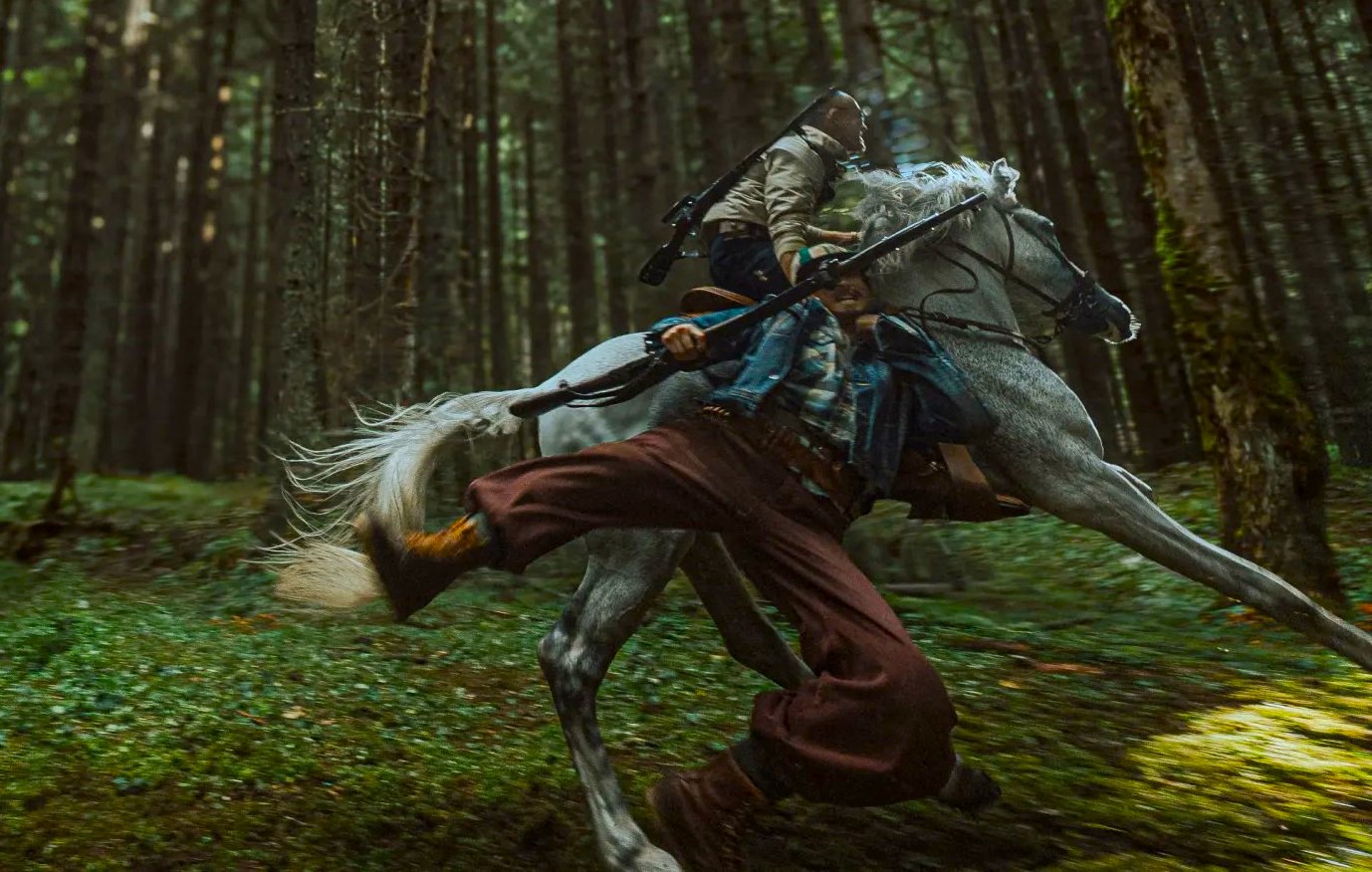
Na Hong-jin has not made a feature since The Wailing in 2016, and Hope, which NEON opened on 1,560 screens this past Wednesday after a Cannes premiere in May, explains where the decade went. It is the most expensive film ever produced in South Korea, a 160-minute creature picture set in a border village called Hope Harbor, and for its first hour it may be the most controlled action filmmaking of the year. Then Na does something stranger than a monster reveal. He takes the hero shot away from his hero and never gives it back. The film's argument lives in that withdrawal.
Hwang Jung-min plays Bum-seok, the village police chief, and the film introduces him in aviator sunglasses, framed low, striding into a town that has been torn open. He plays the man as a walking assumption: that the badge, the gun, and the posture will be enough. Hoyeon, in her first film role after Squid Game, is the sharper instrument as Officer Sung-ae. She drives the squad car like a weapon, treats the carnage as an insult rather than a terror, and gives the picture its one figure of competence. Zo In-sung's hunter Sung-ki leads a rifle-toting posse into the woods and slowly becomes the film's joke about what a rifle-toting posse is for. Michael Fassbender, Alicia Vikander, and Taylor Russell voice the motion-captured invaders in a constructed language built with linguists. Their roles are rationed to almost nothing. That rationing is deliberate, and it costs the film.
The craft here is the reason to buy the ticket. Cinematographer Hong Kyung-pyo, who shot The Wailing, Burning, and Parasite, keeps the camera locked to Bum-seok through the opening hour while the destruction stays a street ahead of him. Roars, gunfire, and a car thrown through the air arrive as sound before they arrive as image. Hong's tracking shots down the village's narrow lanes read as a single held breath. Michael Abels, the composer of Get Out and Nope, starts in dread and ends in nerve damage. Editor Kim Sunmin folds three simultaneous searches into one accelerating line, and the salted-cabbage village, dressed as already ruined before a frame was shot, carries a lived-in wreckage that no green screen supplies.
What Hope understands is that the audience arrives wanting a Western. Land, family, invaders, guns. Na builds that picture with total sincerity, then refuses to let anyone earn it. Once the creatures appear, the low-angle glamour on Bum-seok evaporates; the camera pulls back and finds a frightened, myopic man on an empty road, small against the scale of what is happening. The humans are greedy, filthy, and quick to shoot. The invaders are also filthy, and Na cuts the two kinds of filth against each other on purpose. The film refuses to tell us who to root for and then refuses to apologize for the confusion. A witness account delivered mid-defecation, and an autopsy conducted with a chainsaw, are the closest thing to a thesis statement Na offers: nobody in this story deserves the frame.
The stumbles are real. The creature design, even after Na's post-Cannes re-edit and effects pass, still looks like a rendering that has not finished drying, and the chases in the back half repeat one shape (spot, flee, crash, cheer) until the repetition stops feeling like a joke about repetition. Then the final ten minutes turn the picture into a prologue for a sequel Na has already written. That ending reframes 160 minutes as throat-clearing, and it is fair to resent it.
Still, the resentment is part of the design. Na spends an hour teaching the audience how to enjoy hollow heroism, then spends the remainder pulling the pleasure apart in front of them. The withholding of the aliens' story is the same move as the withholding of the hero shot: a refusal to hand over the emotional resolution the genre promises. Whether that is discipline or a franchise setup is the question the film leaves open on purpose. Either way, the first casualty in Hope Harbor is the man in the sunglasses, and the camera is what kills him.