
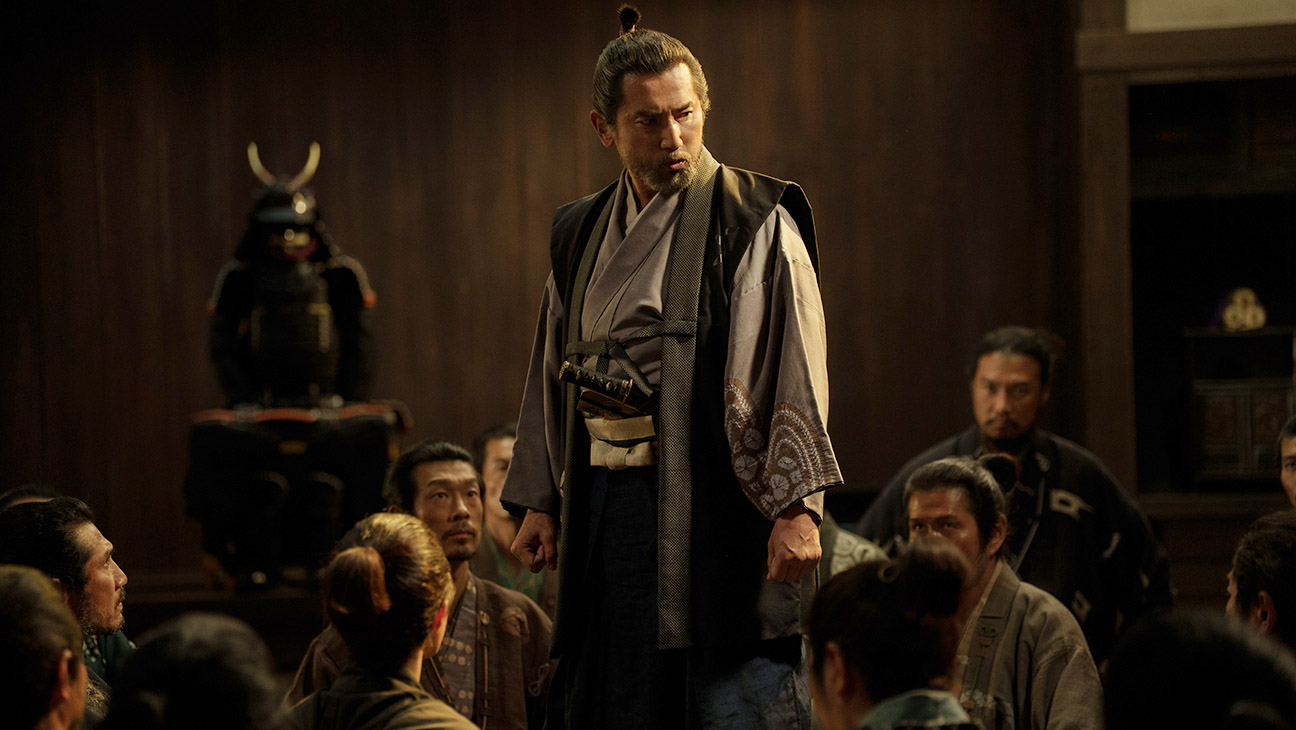
Kiyoshi Kurosawa has spent three decades letting dread seep through the walls of ordinary rooms, in Cure, in Pulse, in last year's Cloud. The Samurai and the Prisoner, his first period film, adapts Honobu Yonezawa's Naoki Prize-winning novel into something stranger than a genre debut: a murder mystery staged inside a siege, with the detective in the dungeon and the client on the throne. In the late sixteenth century, Lord Araki Murashige rebels against the warlord Oda Nobunaga, seals himself inside Arioka Castle, and waits. Kurosawa's real subject is the waiting. The film argues that the man in chains may be the only free man on the premises.
Masahiro Motoki carries the film as Murashige, present in nearly every scene, and he plays leadership as slow suffocation. His face registers each defection, each impossible crime, as one more stone added to a load he chose. Masaki Suda, reuniting with Kurosawa after Cloud, is Kanbei, the envoy sent to negotiate and kept as a prisoner when protocol demanded his head. Suda plays intelligence as appetite; solving the castle's mysteries is the only meal anyone brings him. Yuriko Yoshitaka, as Murashige's devout wife Chiyoho, lets serenity read gradually as strategy. Three performances, three kinds of confinement.
The craft team builds the argument in wood and light. Cinematographer Yasuyuki Sasaki shoots the dungeon in blades of light through wall cracks and keeps the camera's movements small, so that a shifted angle lands like a plot turn. Tetsuo Harada's production design strips the castle to geometry: tatami, beams, courtyards emptied of ornament, a stage with nowhere to hide. Editor Koichi Takahashi cuts sparingly and lets scenes run at theatrical length, each of the film's four chapters enlarging the one before it. Yoshihiro Hanno's score withholds more than it provides. The restraint is the style.
Kurosawa structures the siege as four impossible crimes, one per season. A hostage child killed by an arrow that vanishes. A severed head that disappears. A stolen kettle meant to seal an alliance. A lightning strike that silences a man at the exact moment he turns informant. Each carries the odor of divine punishment, and each time Murashige, who has renounced the samurai appetite for slaughter, sends down to the dungeon for reason. The film refuses the sword fight its genre promises. Violence here is brief, bloodless, almost clerical, because the film's interest is the code that demands it: a system in which mercy reads as treachery and sparing a child is a political error. A samurai film that prosecutes the samurai ethic.
The density costs something. At 147 minutes the film is talk nearly all the way down, and Kurosawa declines to help viewers track his crowded court of retainers, defectors, and clan chiefs. The four-part structure repeats its own procedure: crime, consultation, revelation. Some will read the repetition as ritual. Others will read it as theater that forgot the camera. Both readings are available, and the film does not much care which one wins.
What lingers is the title's slow reversal. Kanbei sits chained beneath the floorboards and thinks with total freedom. Murashige walks his own ramparts hemmed in by ceremony and an army at the gate. Kurosawa's first period film turns out to be his oldest story in older costume: a man discovers that the system he serves was always the trap. The castle is the cell. The dungeon is just honest about it.