
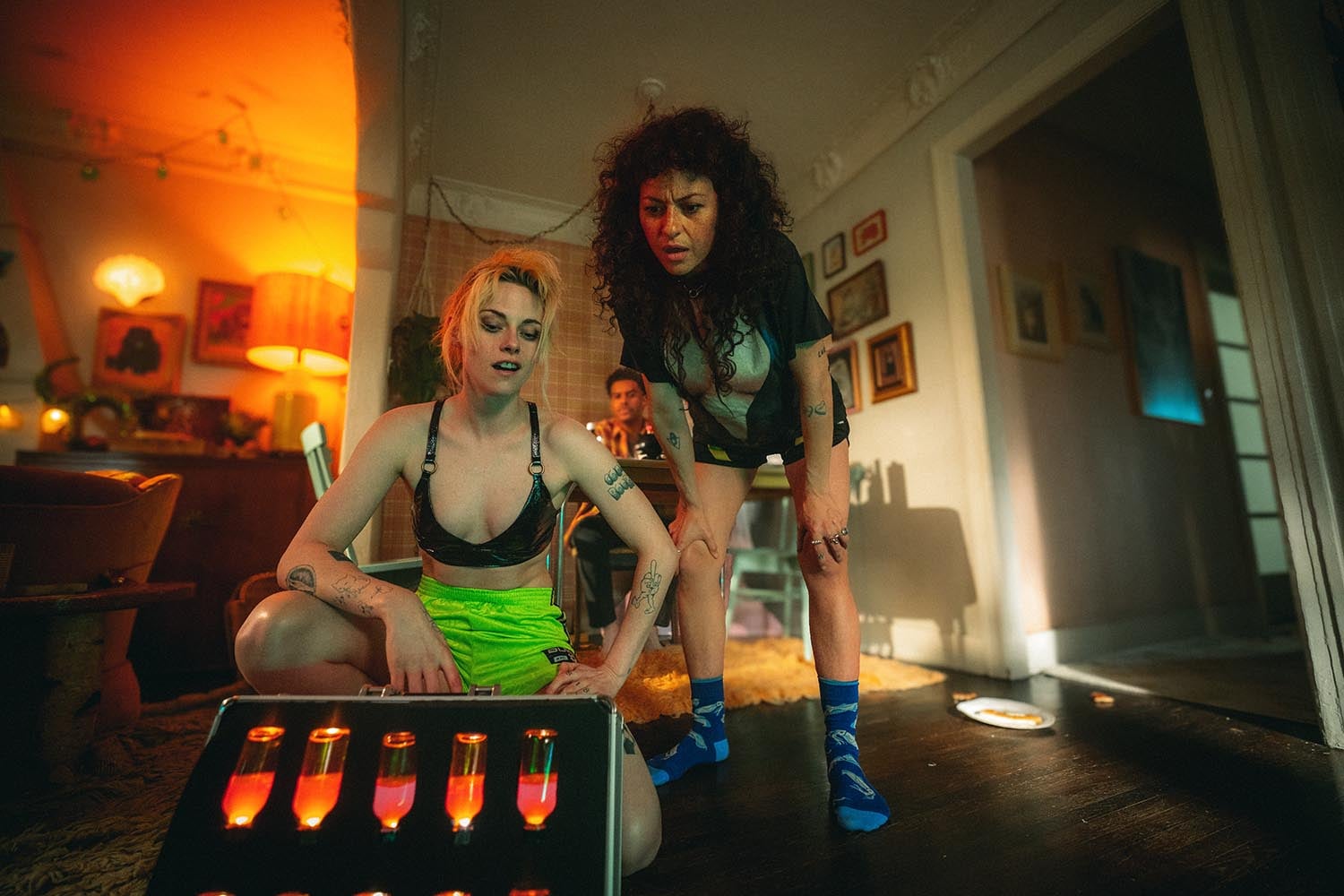
Dylan Meyer's first film as director is a stoner comedy that knows exactly which shelf it belongs on, and spends ninety-nine minutes making sure the shelf knows too. The Wrong Girls puts two broke roommates in possession of an experimental hallucinogen, grants them telepathy and a pursuit by Danish operatives in matching penny loafers, and runs the standard rent-money clock. Meyer has real affection for the form and real command of tone. What she has not brought is a reason the form needed reviving.
Kristen Stewart plays Frankie, a Stanford dropout who has organized her life around not finishing things, and she does something unfashionable with the part: she plays it slack rather than sharp. No irony insurance, no wink. Alia Shawkat gets the looser role as Molly, an aspiring cook whose ambition never survives contact with a couch, and Shawkat is very good at letting a line trail off into nothing. The two of them are the film's best argument. Their rhythm is unforced, the codependency reads as history rather than setup, and every scene where the plot leaves them alone in the apartment is better than the scene that follows. Chris Estrada, as a landlord who delivers a long sincere monologue about Amsterdam to a man he has misidentified as Dutch, walks off with the biggest laugh in the picture.
Todd Banhazl photographs the whole thing in 1990s druggie saturation, hazy filtered light and wide lenses tipped just off level, so the apartment reads as a place with weather in it. Ty Segall's score does the rest, psych-surf guitar laid down thick enough to carry sequences the script leaves underwritten. The craft is the most confident thing here. Meyer, Banhazl and Segall have agreed on a texture and they hold it, which is more than most comedies at this budget manage, and which makes the writing gap harder to ignore rather than easier.
The film refuses contempt for its own characters, and that refusal is worth naming. Frankie and Molly are broke, unserious and thirty-ish, and Meyer declines the generational sneer that would be the cheapest available angle. Nobody is punished for arrested development. Nobody delivers the speech about growing up. Set against comedies that treat their leads as specimens, the warmth registers. But warmth is a disposition, and the film keeps mistaking it for structure. Its influences are all acknowledged and none are tested. Seth Rogen and Evan Goldberg produced through Point Grey, Rogen voices one of the cats, and the lineage from Pineapple Express is stated rather than examined.
The gags carry the cost. Talking cats voiced by Rogen and Kumail Nanjiani are deployed for sincerity as often as for jokes, and they cannot hold either. Kate McKinnon's mad scientist arrives with nothing built around her. The telepathy, which should be the engine, mostly amounts to two people sliding small objects across a table and compelling henchmen to dance. Frankie's Stanford history gets restated in three separate settings without ever becoming a scene. A comedy this committed to its bits earns some patience, and it spends the surplus early.
There is a version of this film that uses the same cast, the same photography and half the plot. Meyer has the harder skills already: she can direct performance, she can sustain a mood, she can let two actors be funny in a room without cutting away. The script is where the debt comes due. Loving a genre and having something to add to it are separate jobs.