
Hafsia Herzi built her name in front of the camera, in Kechiche's The Secret of the Grain and a decade of work after. Her third feature as a director adapts Fatima Daas's autofiction novel, and it reaches US theaters through Strand Releasing carrying a Cannes Best Actress prize, the Queer Palm, and France's Louis Delluc award. The film tracks Fatima, a seventeen-year-old from the Paris banlieue who leaves home for philosophy classes and finds her attraction to women pressing against the Muslim faith she was raised inside. What Herzi understands, and what most films in this register do not, is that the two need not resolve.
That refusal is the spine of the picture. The coming-out story usually runs toward a single catharsis: the door opens, the family ruptures or relents, the self is claimed at last. Herzi declines the appointment. Fatima prays and Fatima desires, and the film treats both as load-bearing rather than staging one to defeat the other.
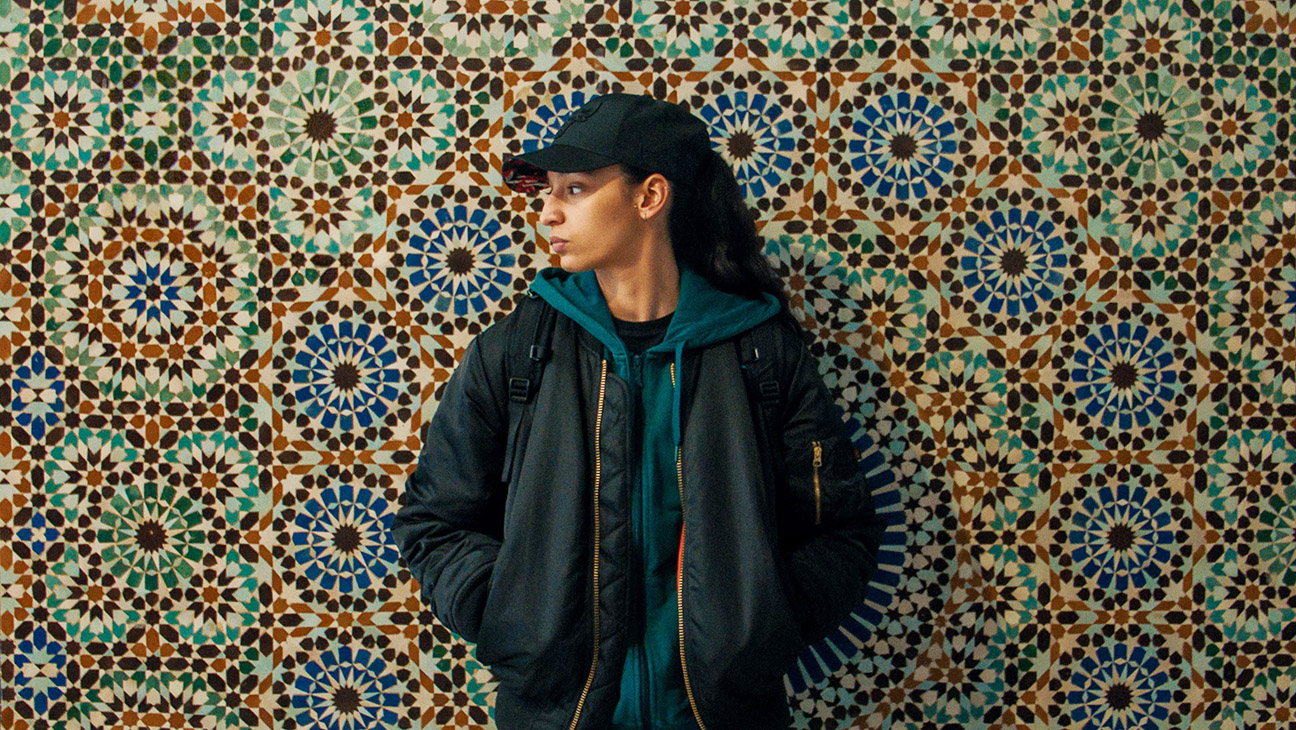
Nadia Melliti, cast at an open call and acting for the first time, carries this without a single confessional speech. She withholds. The performance lives behind a guarded exterior, a former athlete's economy of movement, the watchfulness of someone reading a room before she steps into it. Melliti lets contradiction sit on her face without explaining it away. When doubt and wanting arrive together, she does not pick one for the audience's comfort. That restraint is why the Cannes jury singled her out, and why the film holds.
Cinematographer Jérémie Attard shoots Fatima in close quarters, and a strange thing follows: the nearer the lens gets, the more distant she becomes. The intimacy never curdles into possession. Editor Géraldine Mangenot structures the year across five seasons and lets time pass without the engine of plot, so change registers as accumulation rather than event. Amine Bouhafa's score stays low and unhurried, declining to instruct anyone how to feel. The craft is austere by design. Nothing here aestheticizes Fatima's struggle into spectacle.
The film refuses the easy targets it could have reached for. The mosque is not staged as a villain, the family not as a prison. Desire does not arrive as a liberation that cancels everything before it. Herzi keeps faith and sexuality in the same frame and lets the friction stand, because for Fatima both are true at once. The interior life the film builds is one of coexistence under pressure, not of escape. It is a harder and more honest account of how a person carries commitments that will not agree.
The looseness will divide viewers. Long stretches play almost like a hangout movie, clubs and classrooms and borrowed apartments that drift rather than build, and audiences trained on incident may read the drift as slack. The middle sags where texture stands in for stakes. These are the costs of the method. They are also inseparable from what makes the seduction work; the rhythm has to be loose for the accumulation to feel like a life. Melliti's Fatima never delivers the speech the genre keeps waiting for, and the film is right to deny it. Some contradictions are not problems to be solved. They are conditions to be lived. The reconciliation never comes. That is the point.